
Bio-enzymes
~Debopriya Paul
~Vrijulal MV
What Are Detergents?
Detergents are cleaning agents made of chemical substances known as surgactants that can remove dirt, grease, and stains by helping water mix with oils and other insoluble particles.
These detergents are formulated to work efficiently even in hard water conditions and come in various forms depending on the cleaning purpose. They come in different forms: powder, liquid, bar, gel, paste, etc.
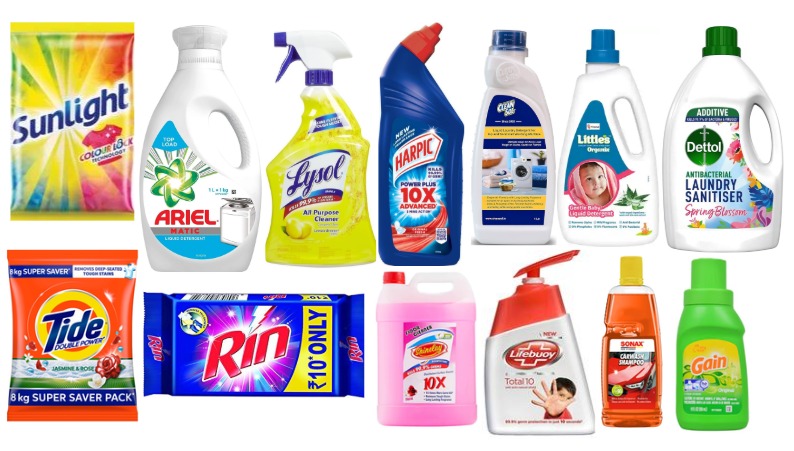
IT'S IMPACT ON HEALTH & ECOLOGY
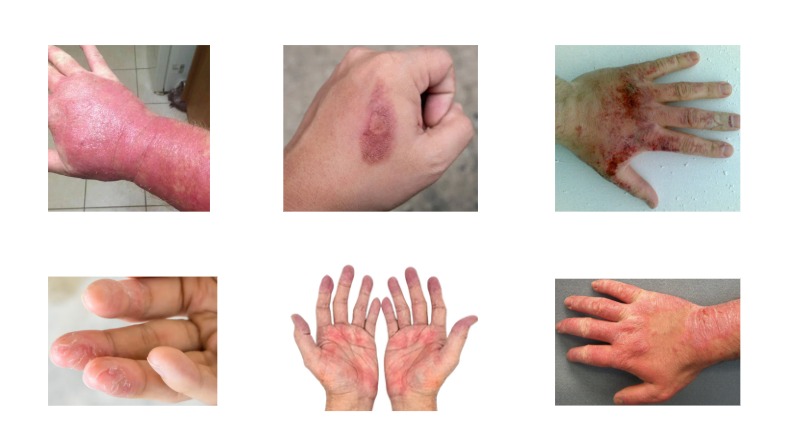
Skin Problems
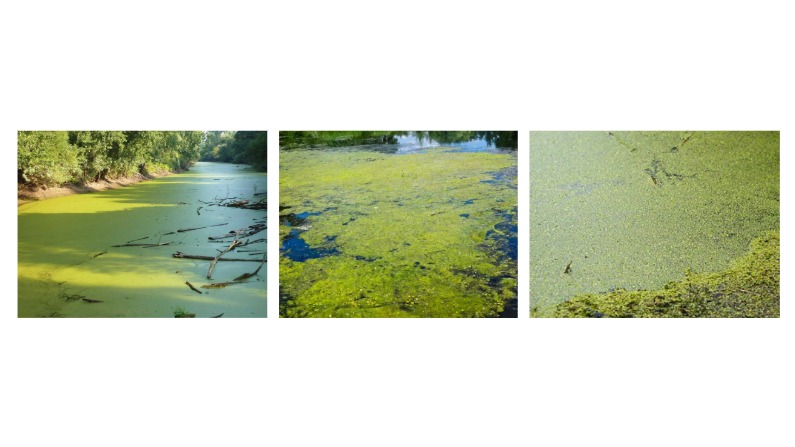
Algal Bloom in Lakes
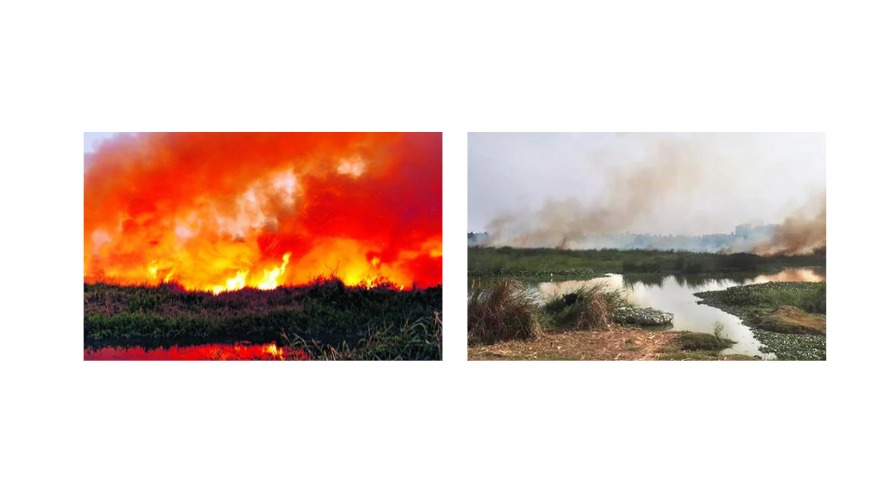
Lake Fire & Lake Froth
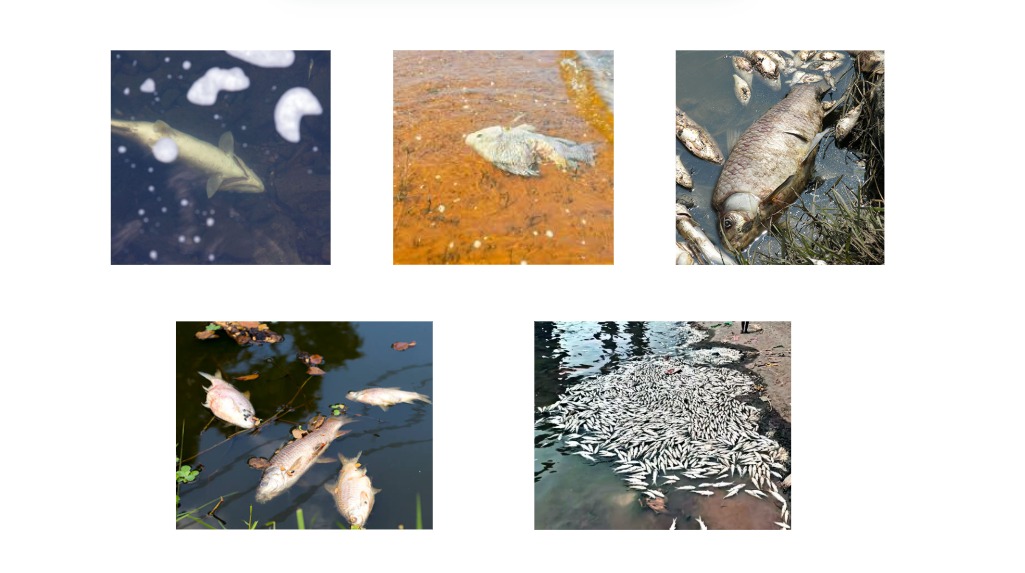
Aquatic Life
Surfactants lower water surface tension, which can harm aquatic animals by disrupting gill function and reproductive cycles. Fragrances and dyes bioaccumulate in fish tissue through uptake from water and diet, causing various sublethal effects that harm growth, and overall health.
WHAT ARE BIO-ENZYMES OR BIO-CLEANERS
Bio cleansers are natural cleaning solutions created with organic materials, enzymes, and microorganisms rather than artificial chemicals. They are used to clean surfaces, get rid of stains, and decompose organic waste. They are environmentally beneficial substitutes for conventional chemical cleaners.
Bio-enzymes’ are also made from natural and organic materials that are likely to be lying around at all times of the year, namely, fruit peels and flower petals, which are probably discarded in dustbins daily. Similar to synthetic detergents, these enzymatic solutions have potent cleaning abilities that are on par with chemical cleaners. They also have antifungal and therapeutic qualities. A sustainable, anti-polluting, and even more economical approach to support the environment. The bio-enzyme is the active cleaning agent, while the bio-cleaner is the final, ready-to-use product.
WHAT MAKES BIOENZYME EFFECTIVE?
- LIPASE – breaks down fats and oils
- PROTEASE – breaks down proteins
- AMYLASE – breaks down sugars
- CELLULASE – degrade plant material
- PECTINASE – promotes anti-fungal properties
- ESTERASE – breaks down esters
BENEFITS
- They are Biodegradable and Eco-friendly.
- Reduction of waste generation.
- No involvement of chemicals.
- Cost-effective.
- Has wound healing properties.
USES
- Can be used for cleaning purpose.
- Natural organic dishwashing solution.
- Laundry detergent alternative.
- Grey water treatment.
- Can be used as pesticide.
- Can be used as an antibiotic solution to treat injuries.
How To Prepare Bio-enzymes
REQUIREMENTS
- Fruit peels (CITRUS)
- Flower petals (Jasmine, Lavender, Rose, Marigold)
- Sugar (Brown sugar/Jaggery)
- Yeast
- Water
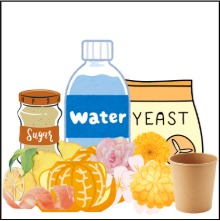
STEPS TO PREPARE BIO-ENZYMES.
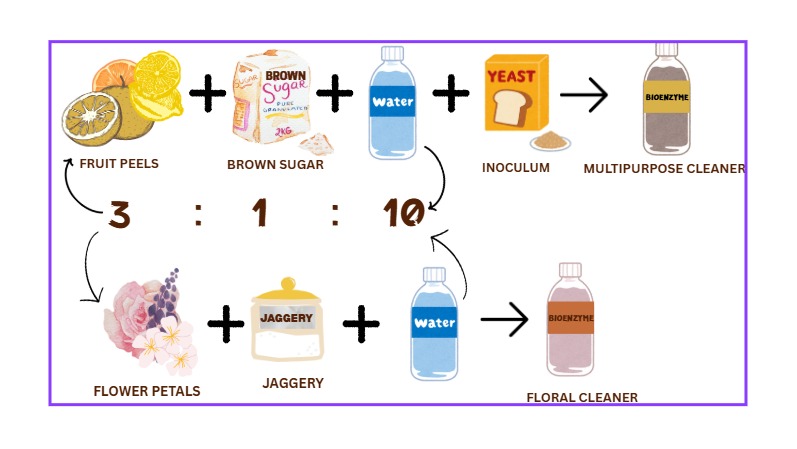
- 3 parts fruit peels and some flower petals.
- 1 part jaggery or brown sugar.
- 10 parts water.
- A pinch of yeast.
- Combine in a clean, large, PLASTIC airtight container.
- Stir daily for the first few days, and release pressure by opening the lid.
- Ferment for 1 month in a cool dark place- all the peels and petals will settle at the bottom once the fermentation is complete.
- Filter the liquid into a clean bottle once the solution is ready.
CONCLUSION
Our ecosystem benefits greatly from the use of Bio-enzymes since they lessen chemical contamination and encourage environmentally friendly waste management. Aquatic life is protected and water quality is also maintained since Bio-enzymes are biodegradable and do not discharge toxic chemicals into water bodies like traditional cleansers and detergents do. they are created from organic kitchen waste, and support a circular economy and lessen domestic trash. We can improve groundwater health, reduce the chemical load in soil and air, and make the environment safer for biodiversity and people by substituting Bio-enzymes for synthetic cleansers. All things considered, Bio-enzymes are essential for maintaining ecological balance and protecting natural resources.
REFERENCES
- Satopradhan. How Effective Are Bio-Enzyme-Based Cleaners Compared with Other Commercial Cleaning Agents. Accessed June 19, 2025.
- ResearchGate. Comparing the Efficacy of Homemade Bio-Enzymes to Store-Bought Enzymes. August 15, 2024.
- ResearchGate. Synthesis, Physio-Chemical Analysis, and Applications of Bio-Enzymes Based on Fruit and Vegetable Peels. September 8, 2022.
- Phutela, U. G., Arora, R., Kumar, A., & Aggarwal, Y. (2025). Potential use of Mosambi peel-based bioen-zymes for wound management in animals.The Indian Journal of Animal Reproduction, 46(1), 61-67. 10.48165/ijar.2025.46.01.10
- Potential Use of Mosambi Peel-Based Bioenzymes for the Wound Management in Animals.
- Keshavarzian F, Saberian M and Li J 2021 Investigation on mechanical properties of steel fiber reinforced reactive powder concrete containing nano-SiO2: An experimental and analytical study Journal of Building Engineering
- Feasibility of using bio-enzyme as an admixture in reactive powder concrete.
Links to Sources
https://satopradhan.com/blogs/bio-enzyne-general-questions/how-effective-are-bio-enzymes-based-cleaners-compared-with-other-commercial-cleaning-agents
https://www.researchgate.net/publication/383051469_Comparing_the_Efficacy_of_Homemade_Bio-enzymes_to_Store-Bought_Enzymes
https://www.researchgate.net/publication/363481720_Synthesis_Physio-Chemical_Analysis_and_Applications_of_Bio-Enzymes_Based_on_Fruit_and_Vegetable_Peels
https://www.researchgate.net/publication/391149603_Potential_Use_of_Mosambi_Peel-Based_Bioenzymes_for_the_Wound_Management_in_Animals
https://www.researchgate.net/publication/369874891_FEASIBILITY_OF_USING_BIO-ENZYME_AS_AN_ADMIXTURE_IN_REACTIVE_POWDER_CONCRETE